
Can Myopia Management Help Reduce the Need for Stronger Glasses?

Can Myopia Management Help Reduce the Need for Stronger Glasses?

Can Myopia Management Help Reduce the Need for Stronger Glasses?

Can Myopia Management Help Reduce the Need for Stronger Glasses?

Can Myopia Management Help Reduce the Need for Stronger Glasses?

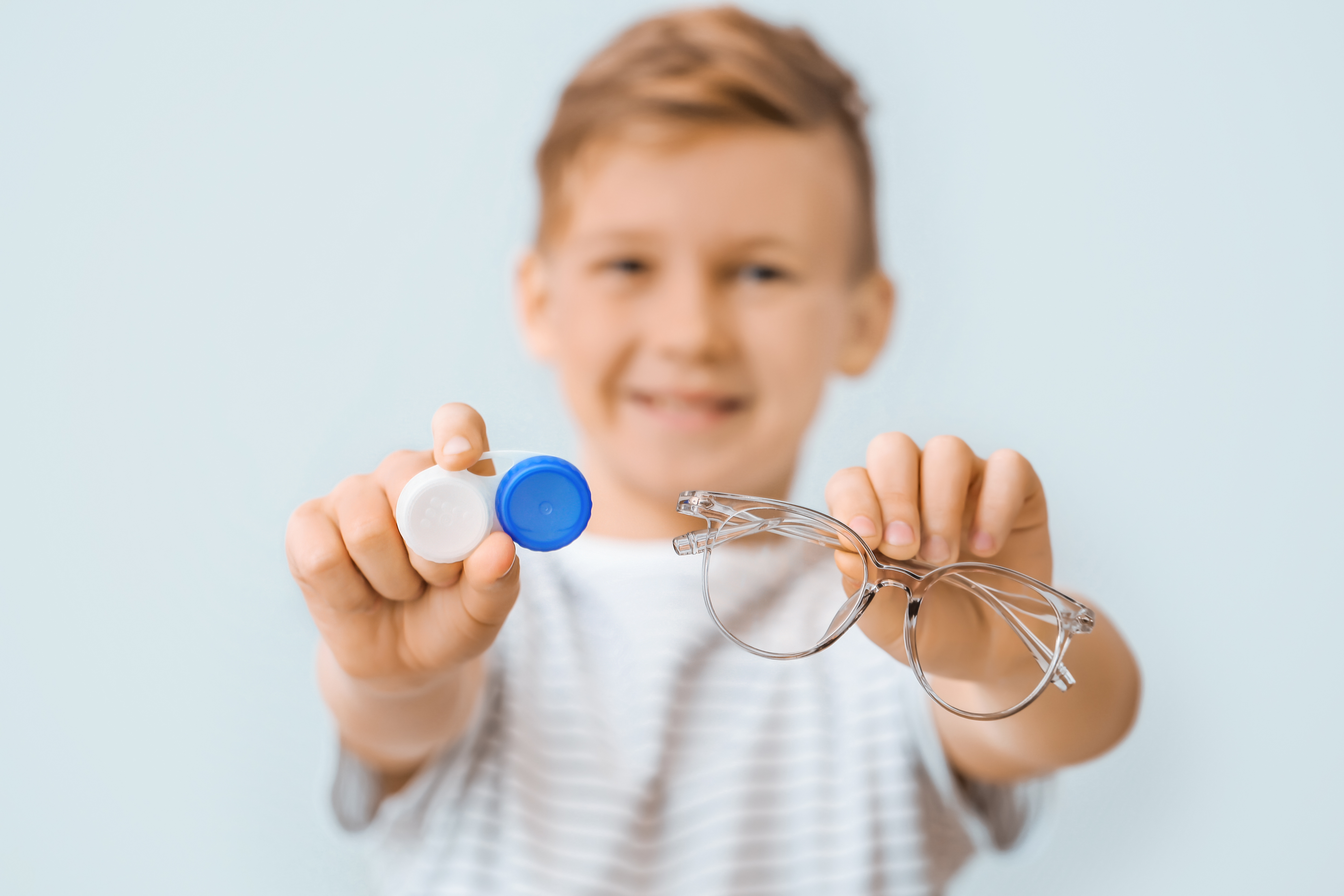
If your child's glasses prescription seems to get stronger at every eye exam, you may wonder whether those changes can be slowed. For many children, myopia management can help. Rather than simply correcting blurry distance vision, these treatments aim to slow the progression of nearsightedness. At True Vision Optometry in Montebello, CA, we help families understand their options and develop a plan based on each child's eyes.
Why Do Children's Glasses Prescriptions Keep Getting Stronger?
Myopia, or nearsightedness, makes distant objects appear blurry. It often develops during childhood and can progress as the eyes grow. In many children, the eye becomes longer than normal, causing light to focus in front of the retina instead of directly on it.
Traditional prescription glasses help children see clearly, but standard single-vision lenses do not generally slow the underlying progression of myopia. That is why a child may need stronger glasses over several school years, even when they wear their current prescription consistently.
How Can Myopia Management Make a Difference?
Myopia management targets the progression of nearsightedness, not just the blur it causes. Treatment may help reduce the rate of prescription changes, although results vary and some progression can still occur.
Slowing myopia is important for reasons beyond a child's current glasses prescription. Higher levels of nearsightedness are associated with increased lifetime risks of certain eye conditions, including retinal detachment and myopic macular degeneration. Managing progression during childhood may help reduce those risks, although no treatment can eliminate them.
Which Myopia Management Treatments Are Available?
At True Vision Optometry, we assess your child's needs and discuss approaches that may include:
· Orthokeratology (Ortho-K): Custom contact lenses worn overnight temporarily reshape the cornea, providing clearer daytime vision without glasses for suitable patients. Ortho-K can also help slow myopia progression.
· Low-dose atropine eye drops: These prescription drops may slow the progression of childhood myopia. Because they do not correct blurry distance vision, glasses or contact lenses may still be needed.
· Multifocal contact lenses: Certain specially designed soft contact lenses can correct vision while helping slow myopia progression in eligible children.
The best option depends on factors such as your child's age, prescription, eye health, daily routine, and ability to follow treatment instructions.
When Should You Ask About Myopia Management?
Consider scheduling an evaluation if your child's prescription has increased repeatedly, they struggle to see the board at school, or there is a family history of nearsightedness. We can review their prescription history, examine their eyes, and explain whether myopia management is appropriate.
Regular follow-up visits are also important. They allow us to monitor changes and determine whether a treatment plan needs adjustment. Healthy habits, such as spending time outdoors and taking breaks from close work, can support eye health but do not replace individualized myopia care.
If your child's glasses prescription keeps changing, schedule a myopia management evaluation with True Vision Optometry in Montebello, CA, by calling (323) 403-4116.

All Eye
Care Services

Keep
In Touch

Contact Info
Hours of Operation
- Monday 9:00am - 6:00pm
- Tuesday 10:00am - 7:00pm
- Wednesday 10:00am - 6:00pm
- Thursday 8:00am - 5:00pm
- Friday 9:00am - 6:00pm
- Saturday 8:00am - 1:30pm
- Sunday Closed
© 2026 True Vision Optometry. All rights Reserved. Accessibility Statement - Privacy Policy - SMS Terms of Serivce - Sitemap
Powered by:
